El Gouz Summit Near Agadir: A Complete Mountain Hiking Guide
Hike to 1,160 Metres and Discover a Different Side of Agadir.
When people think about Agadir, they usually imagine beaches, surfing, sunsets and the Atlantic Ocean.
But behind the coast is another world.
A world of mountains, valleys, argan trees, Amazigh villages and quiet hiking trails.
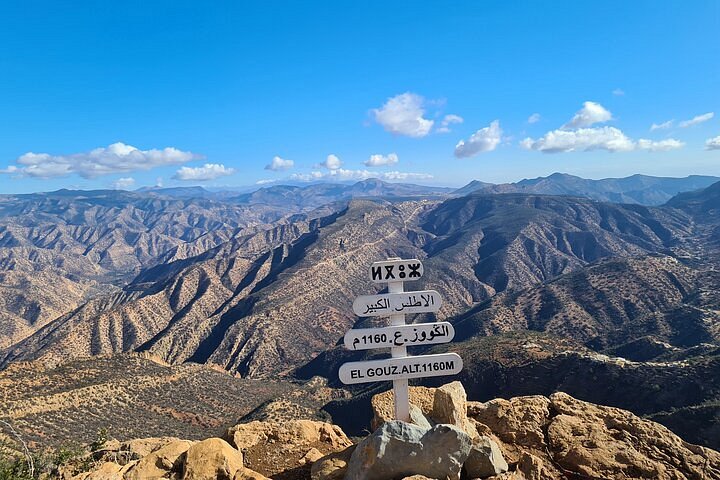
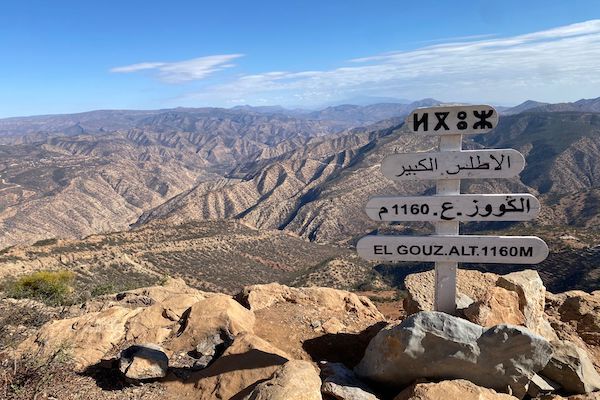
One of the best ways to discover this side of the region is to climb El Gouz Summit, a mountain peak rising to approximately 1,160 metres above sea level in the Idawtanan mountain area near Agadir and Taghazout.
El Gouz is not simply a viewpoint.It is a real mountain hike.
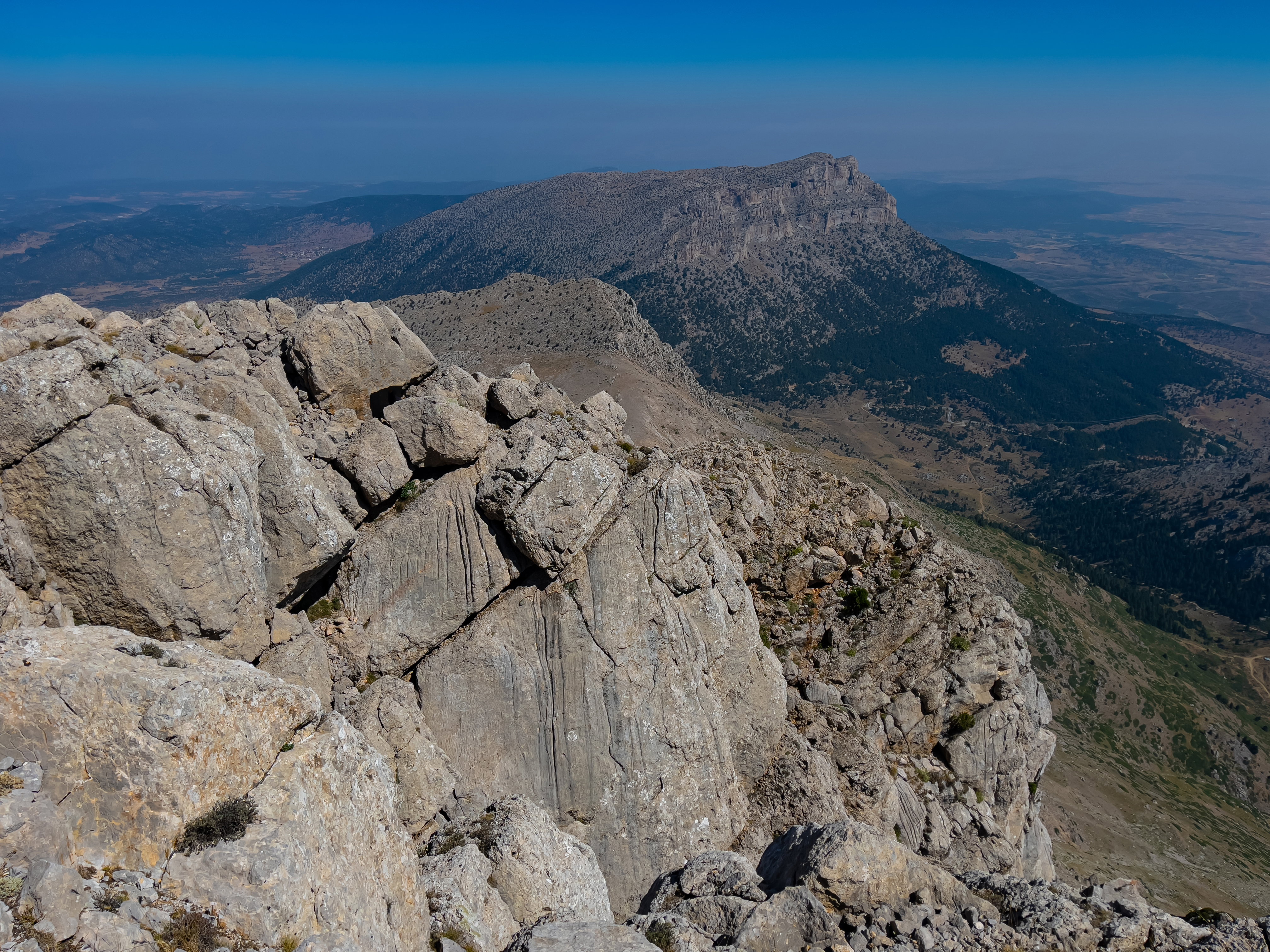
You walk through rural landscapes, climb through forest and rocky terrain, pass traditional mountain villages and eventually reach an open summit with panoramic views across the surrounding mountains and towards the Atlantic.
For travelers looking for something more adventurous than a normal sightseeing excursion, El Gouz Summit is an unforgettable way to experience the mountains near Agadir.
🏔️ What Is El Gouz Summit?
El Gouz is a mountain summit in the Idawtanan region, inland from the Atlantic coast and within the mountainous landscape north of Agadir.The summit reaches approximately 1,160 metres above sea level.The mountain is sometimes referred to locally as Lalla Houja, and the hiking area is associated with the village of Tektentine/Takentine. Different published routes use slightly different starting points and distances, so the exact itinerary depends on the trail chosen.What makes El Gouz special is the combination of:
Mountain + forest + Amazigh villages + hiking + panoramic views + Atlantic scenery
You are close enough to Agadir and Taghazout for a day trip, but once you start walking, the atmosphere feels completely different from the coast.
🌊 From the Atlantic Ocean to the Mountain Summit
One of the most impressive things about El Gouz is the contrast.You can begin your day near the Atlantic Ocean.
Then, within a relatively short journey, you are surrounded by mountains.
As you climb higher, the landscape opens up.
On clear days, the summit provides wide views across the surrounding valleys and towards the Atlantic coastline. Several current descriptions of the route also highlight views toward the High Atlas and the ocean.
This is one of the reasons the summit feels so rewarding.
You are not simply looking at a mountain.
You are standing on top of one.
🥾 The El Gouz Summit Hike
The hike is a genuine mountain experience.
The trail includes a combination of:
- Rocky paths
- Dirt tracks
- Forest sections
- Mountain slopes
- Open ridges
- Steeper uphill sections
The exact distance and duration depend on the route and starting point.
Published routes currently range around 11–14 km for longer out-and-back itineraries, while other recorded tracks represent only particular sections of the ascent.
For that reason, AdrarHike recommends choosing the itinerary according to the group's fitness, weather and mountain conditions.
The goal is not simply to reach the summit as quickly as possible.
The goal is to enjoy the journey.
🌳 Walking Through Argan Landscapes
The journey towards El Gouz takes you through landscapes where the argan tree is an important part of the environment.
The argan tree, Argania spinosa, is one of the characteristic trees of southwestern Morocco.
It is particularly important in the local economy and culture.
Argan fruits are traditionally used to produce argan oil, while the tree itself plays an important ecological role in a region where water is limited.
As you walk through the landscape, your local host can explain how the trees are connected to:
Nature + agriculture + food + traditional Moroccan culture
🌲 Juniper and Thuya Forests
One of the surprising aspects of El Gouz is that the landscape is not simply dry and rocky.Parts of the route pass through woodland containing juniper and thuya, alongside argan trees. Current descriptions of the El Gouz trail specifically mention juniper and Barbary thuya forests.The atmosphere changes as you enter the forest.The temperature can feel cooler.The light changes.The smell of the trees becomes noticeable.
And suddenly, you understand that the mountains around Agadir have much more biodiversity than you might expect from the coastal climate.
🌿 Plants and Flowers Around El Gouz
The vegetation changes according to:
Altitude → season → rainfall → exposure → soil
During wetter periods, the mountains can become greener and seasonal plants and flowers appear.Depending on the season and exact route, you may encounter:
- Argan trees
- Thuya
- Juniper
- Wild grasses
- Aromatic plants
- Seasonal wildflowers
- Mountain shrubs
The best way to experience the vegetation is with a local host who can identify the plants you actually encounter during the hike.We also encourage visitors not to pick wildflowers.Take photographs instead.
🐦 Wildlife Around El Gouz
El Gouz is a natural mountain environment.
You are not guaranteed to see wildlife, but walking quietly can give you the opportunity to observe animals that are easily missed when travelling by vehicle.
You may encounter:
- Mountain birds
- Birds of prey
- Small birds
- Lizards
- Butterflies
- Insects
- Goats and other domestic animals
Look up occasionally.
The sky above the mountains can be just as interesting as the trail beneath your feet.
🏘️ Amazigh Villages and Mountain Life
One of the most important parts of the El Gouz experience is the cultural landscape.
The mountain is surrounded by Amazigh communities and rural villages.
Along the journey, you can see how people have adapted their lives to the mountains.
You may notice:
- Traditional houses
- Small agricultural fields
- Argan trees
- Livestock
- Mountain paths
- Terraced landscapes
- Local farms
This is not a museum.
It is a living environment.
People continue to live, farm and work in these mountains.
For visitors, this provides an opportunity to understand a side of Morocco that is very different from the tourist areas of Agadir and Taghazout.
🧭 Why Hike El Gouz Instead of Taking a Normal Excursion?
A normal excursion can show you a place. A hike allows you to experience it.
During a road trip, you see the mountain through a window. During the El Gouz hike, you feel the mountain under your feet.
You hear the wind.
You smell the trees.
You notice small plants.
You meet local people.
You stop when you want.
You climb.And finally, you reach the summit.
That sense of achievement is what makes El Gouz different.
🏆 Reaching the Summit
Eventually, the forest and lower slopes begin to give way to more open terrain.
The horizon becomes wider.
The climb becomes more exposed.And then you reach the summit.
At approximately 1,160 metres, El Gouz provides an impressive mountain panorama.Take your time here.There is no reason to rush.
This is the perfect moment to:
📸 Take photographs
🥤 Drink water
🍎 Have a snack
🌄 Enjoy the panorama
🌿 Relax
📍 Take a summit photoOn a clear day, the contrast between the mountains and the Atlantic makes the summit particularly spectacular.
🌊 Can You See the Ocean From El Gouz?
Yes, the summit route is known for panoramic views towards the Atlantic coastline.
This is one of the most special features of the hike.
You can stand at more than a thousand metres above sea level and look back towards the same ocean where you may have spent the morning surfing or relaxing on the beach.
It gives you a completely different perspective of the Agadir and Taghazout region.
🌅 El Gouz and Sunset
If conditions, timing and the itinerary allow it, the mountain can provide beautiful late-day light.
As the sun moves lower, the rocky slopes and valleys change colour.
However, sunset hikes should only be planned with appropriate daylight, weather and route knowledge.
Mountain terrain becomes significantly more difficult after dark.
For a normal day trip, we recommend reaching the summit with plenty of time for the descent.
💪 How Difficult Is El Gouz Summit?
El Gouz should be treated as a moderate to challenging mountain hike, depending on the route, weather and fitness of the group.
The climb includes sustained uphill sections and uneven terrain.
Current hiking descriptions classify the route from moderate to challenging, with longer itineraries of approximately 11–14 km.
You do not need to be a professional mountaineer.
But you should be comfortable with several hours of walking and climbing.
This hike is best for people who:
- Enjoy walking
- Have reasonable fitness
- Are comfortable on uneven terrain
- Want a real mountain challenge
- Don't mind climbing uphill
- Want to spend a full day outdoors
If you are unsure about your fitness level, tell AdrarHike before booking so we can recommend the most suitable itinerary.
👨👩👧 Is El Gouz Suitable for Beginners?
A motivated beginner may be able to complete the hike, but it should not be treated as an easy walk.The difficulty depends on:
- Your fitness
- Temperature
- Route
- Pace
- Weather
- Previous hiking experience
A local guide can adapt the pace and include regular breaks.The important thing is not to compete with other hikers.
The mountain will still be there. Take your time.
☀️ Hiking El Gouz in Summer
Summer requires extra care.Temperatures can become high, particularly on exposed sections.For summer hikes:
- Start early
- Carry enough water
- Wear a hat
- Use sunscreen
- Take regular breaks
- Avoid rushing
- Follow your guide's advice
If temperatures become excessive, the itinerary should be adapted.Mountain safety is always more important than reaching the summit.
🌧️ Hiking After Rain
Rain can transform mountain trails.
Rocky surfaces can become slippery.
Small streams may appear.
Visibility can change.
For this reason, weather conditions should always be checked before departure.
Your local host can decide whether the planned route remains appropriate.
🍂 Best Time to Hike El Gouz
For comfortable hiking conditions, the cooler months are generally more suitable.Current local hiking information commonly recommends October to April as the best period.
🌸 Spring
Excellent for greener landscapes and seasonal vegetation.
☀️ Summer
Possible, but early starts are important because of the heat.
🍂 Autumn
One of the best periods for comfortable mountain hiking.
❄️ Winter
Cooler conditions and possible rain can make the landscape very different.Always check the weather before hiking.
🎒 What Should You Bring?
For El Gouz, pack for a real mountain hike.
Essential:
🥾 Hiking shoes with good grip
💧 Plenty of drinking water
🧢 Hat
🕶️ Sunglasses
🧴 Sunscreen
🎒 Small hiking backpack
🧥 Light jacket
📱 Fully charged phone
🔋 Power bank
🍌 SnacksOptional:🥢 Hiking poles
📷 Camera
🧭 Offline mapGood shoes are particularly important because some sections are rocky and uneven.
⚠️ El Gouz Summit Safety
El Gouz is a natural mountain environment.
The trail is not a city walking path.
Some published information notes that sections of the route are not marked and that phone reception can be irregular.
For this reason, local knowledge can be extremely useful.
Follow these basic rules:
Stay with your group.
Don't leave the trail unnecessarily.
Carry enough water.
Don't climb unstable rocks.
Check the weather.
Don't hike alone if you are unfamiliar with the area.
Allow enough daylight for the descent.
And most importantly:
Listen to your local guide.
🌍 Responsible Hiking
The beauty of El Gouz depends on keeping the mountain clean and respected.
When visiting:
Take your rubbish with you.
Don't leave plastic bottles behind.
Don't pick wildflowers.
Don't damage trees.
Don't disturb animals.
Respect agricultural land.
Respect local villages.
Ask before photographing people.
Keep noise levels low.
A mountain adventure should leave memories, not rubbish.
🍲 Lunch at the Mountain
After several hours of hiking, food tastes different.
Depending on your AdrarHike package, you can enjoy a traditional Moroccan/Amazigh-style meal after or during the hike.
A typical mountain meal can include:
🍲 Tajine
🥖 Fresh bread
🥗 Seasonal salad
🍊 Fresh fruit
🍵 Moroccan mint tea
The exact menu depends on the experience and local arrangements.
Imagine sitting down after reaching the summit or completing the main climb, surrounded by mountains and enjoying traditional Moroccan food.
That is part of the experience.
🍵 Moroccan Tea in the Mountains
Tea is an essential part of Moroccan hospitality.
After hiking, a glass of Moroccan mint tea can become one of the most memorable moments of the day.
Sit down.
Rest your legs.
Look at the mountains.
Drink your tea.
And enjoy the silence.
📸 Photography at El Gouz
Bring your camera.There are many opportunities for spectacular photographs.
The trail
Capture the changing landscape as you climb.
The forest
Photograph argan, thuya and juniper landscapes.
The villages
Capture the relationship between Amazigh architecture and the mountains.
The summit
Take your summit photograph at approximately 1,160 metres.
The Atlantic
On clear days, photograph the coastline from the mountain.
🗺️ A Typical AdrarHike El Gouz Experience
Your exact itinerary can change according to weather, fitness and local conditions.A typical day can look like this:
1. Meet Your Local Host
Meet at the agreed starting point.
2. Travel Towards the Mountains
Leave the coast and enter the Idawtanan mountain landscape.
3. Arrive at the Trailhead
Prepare your shoes, water and backpack.
4. Begin the Hike
Start climbing through rural landscapes and forest.
5. Discover Nature
Learn about argan, thuya, juniper and other vegetation.
6. Pass Mountain Villages
Discover local Amazigh life and agricultural landscapes.
7. Continue Towards the Summit
The terrain becomes more open as you gain altitude.
8. Reach El Gouz Summit
Enjoy the panoramic mountain and Atlantic views.
9. Rest and Eat
Enjoy your food, snacks or traditional meal according to your package.
10. Descend
Return carefully along the mountain trail.
11. Return to the Coast
Finish your mountain adventure and head back towards Agadir, Tamraght or Taghazout.
❓ Frequently Asked Questions
How high is El Gouz Summit?
The summit is approximately 1,160 metres above sea level.
Where is El Gouz Summit?
It is located in the Idawtanan mountain region inland from Agadir, close to the Tektentine/Takentine area.
How long is the hike?
The exact distance depends on the route and starting point. Published full itineraries range approximately from 11 to 14 km.
Is El Gouz difficult?
It is generally a moderate to challenging hike, particularly because of the sustained ascent and mountain terrain.
Can beginners hike El Gouz?
A fit and motivated beginner may be able to complete it, but it is not an easy sightseeing walk.
Can I hike without a guide?
Some people do hike independently, but parts of the route may be unmarked and phone reception can be irregular. A local guide is recommended if you don't know the area.
Can I see the Atlantic Ocean?
Yes. The summit is known for panoramic views towards the Atlantic coastline.
What is the best season?
October to April is generally more comfortable for hiking because temperatures are cooler.
What should I bring?
Hiking shoes, water, sunscreen, a hat, snacks, a small backpack and a light jacket are recommended.
🏔️ El Gouz vs Paradise Valley
If you are choosing between the two, think about what kind of day you want.
Paradise Valley
🌴 Natural pools
💧 Water
🥾 Easier nature walks
🏞️ Famous scenery
☕ Cafés and tourist facilities
👨👩👧 More suitable for a relaxed day
El Gouz Summit
🏔️ Real summit
🥾 Longer mountain hike
🌳 Forest
🌊 Atlantic views
🌄 Panoramic landscapes
💪 More physical challenge
🌿 Quieter mountain atmosphere
In simple words:
Paradise Valley is about relaxing in the valley.El Gouz is about climbing the mountain.
Both show you a different side of the Agadir region.
🌍 Why El Gouz Is Special
There are many places where you can take a photograph of a mountain.
El Gouz gives you the opportunity to climb one.
You start in a rural Amazigh landscape.
You walk through forests.You climb rocky paths.
You look back at the valleys.
You continue higher.
And eventually you reach a summit where the landscape opens around you.
Below you are valleys and villages.
In the distance is the Atlantic.
And behind you are the mountains.
That feeling is difficult to experience from a car.
You have to walk for it.
🏆 Reach the Summit With AdrarHike
At AdrarHike, we believe outdoor experiences should be more than simply visiting a location.We want travelers to understand the place.
During El Gouz, we combine:
🥾 Hiking
🏔️ Mountain scenery
🌳 Nature
🌿 Local plants
🏘️ Amazigh culture
📸 Photography
🍲 Traditional food
🍵 Moroccan hospitality
The experience is adapted to the group and current mountain conditions.
Our priority is simple:
A safe, authentic and memorable day in the mountains.
🟢 Ready to Climb El Gouz Summit?
Hike El Gouz Summit With AdrarHike
Leave the beaches behind and discover the mountains of the Agadir region.
Climb towards approximately 1,160 metres, explore Amazigh mountain landscapes, walk through argan and forested areas and enjoy panoramic views towards the Atlantic.Whether you are staying in Agadir, Tamraght or Taghazout, El Gouz offers a completely different perspective of southern Morocco.
👉 Book Your El Gouz Summit Hike on WhatsApp
🟢 BOOK EL GOUZ SUMMIT WITH ADRARHIKE